
Compare Early County Property Value Types
One parcel in Early County can carry several numbers at once. Each answers a different question. Assessed value follows Georgia's rule at 40 percent of fair market value. Exemptions then shape the final taxable figure. The recorded consideration sits apart from that. It is a fact drawn from the deed or the PT-61 form rather than the tax roll.
| Value | What It Is | Where |
|---|---|---|
| Fair market value | County estimate under the willing-buyer and willing-seller standard | Assessment record or notice |
| Assessed value | Forty percent of fair market value in Georgia | Assessor roll |
| Net taxable value | Assessment after qualifying exemptions | Tax and assessment records |
| Recorded consideration | Transfer amount reported with a deed or PT-61, subject to context | Clerk / GSCCCA |
So the assessed value is not a predicted sale price. An exemption can shrink the taxable base while fair market value stands still. Deed consideration, meanwhile, can be nominal, exempt, or nothing like an open-market sale.
Date Early County Assessed Values
Property is returned and valued in the annual assessment cycle, and the county tax guidance points to January 1 as the key ownership and valuation date. A later sale can be newer than the certified roll. Always save the tax year and notice date beside the number. The county publishes no countywide revaluation year. That question belongs to the Board of Tax Assessors, not to guesswork about trends.
Understand Early County's Forty-Percent Ratio
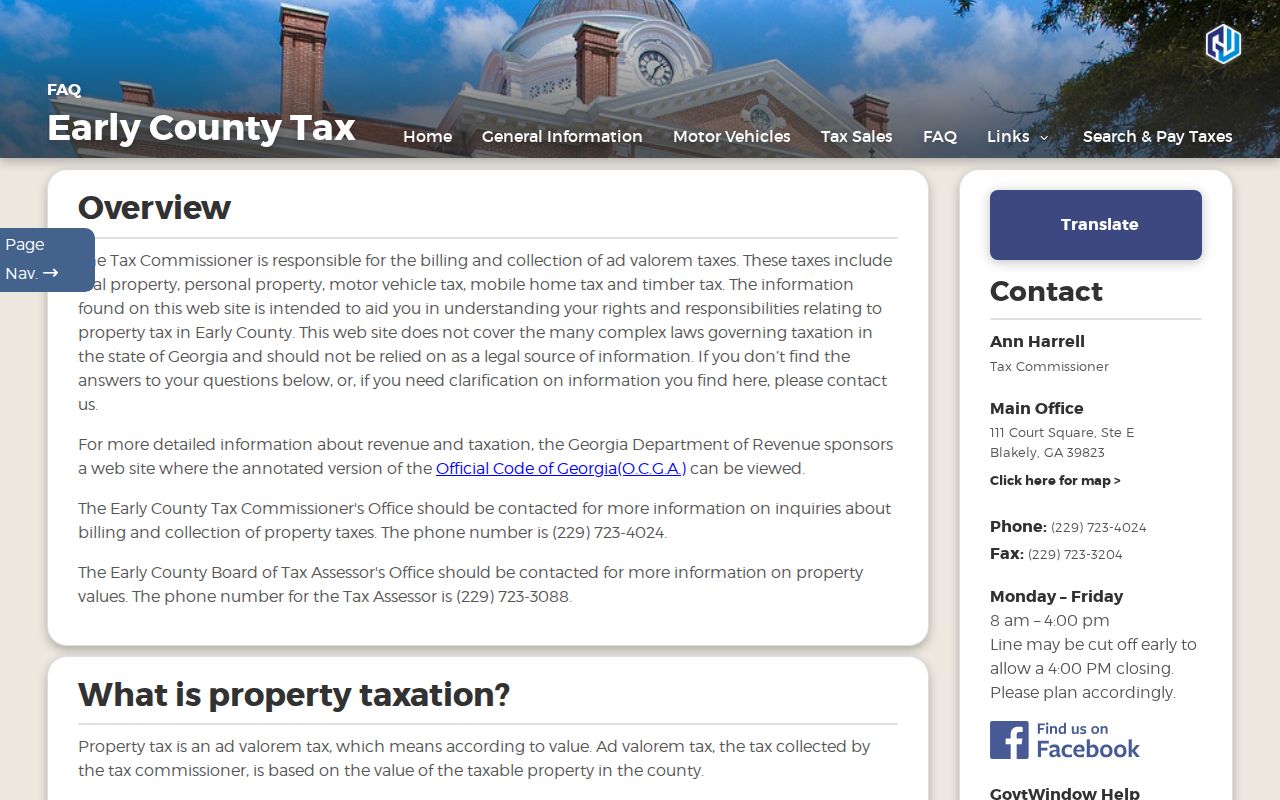
The Early County Tax Commissioner FAQ states the local rule plainly. Assessed value is 40 percent of fair market value. Knowing that ratio helps a reader read both fields correctly. It does not convert either figure into a current appraisal. The FAQ also carries related assessment context worth a look.
Read the displayed year and parcel identity before comparing a figure with another source.
Estimate Early County Property Value Records
Start with the assessor entry for the assessment figures. Keep sale evidence in a separate column.
- Open Early qPublic and locate the parcel by a supported address or parcel route.
- Save the year, parcel ID, fair market value, assessed value, and exemptions if shown.
- Check the deed or PT-61 route for recorded consideration and recording date.
- Verify that splits, combinations, or new parcel IDs have not changed the land being compared.
- Label each number by source and date instead of averaging unlike figures.
- Assessed value
- The statutory share of fair market value used in the tax system.
- Market value
- The county's estimate under its legal valuation standard.
- Assessment ratio
- The relationship between assessed and fair market value, forty percent here.
- Sale consideration
- The transfer amount reported in a recorded deed or PT-61 context.
- Reassessment
- A later official determination of value for the roll.
Compare Early County Value with Recorded Consideration
GSCCCA deed and PT-61 records can supply a transfer figure. It may be nominal, exempt, incomplete, or tied to a non-arm's-length event. Confirm the instrument, the parties, the legal description, and the date. Only then treat it as a comparison point. A deed amount, a tax-sale amount, and a current market estimate are not interchangeable. One recorded transfer does not establish a trend, either.
Keep Early County Property Value History
A parcel split or combination can make an assessment jump or fall. The underlying rate does not change. Preserve current and former parcel IDs, legal descriptions, acreage, plat references, and effective dates. Those links let you compare the same land across tax years. The A, B, D, and J prefix system can also flag municipal jurisdiction. Number-leading parcels indicate unincorporated routing. Treat the prefix as a clue, not proof that parcel geometry stayed constant.
Separate Early County Exemptions from Property Value
Homestead, agricultural, conservation, historic, or freeport treatment can affect taxable value when it applies. None of it necessarily moves the fair market figure. The Early County property tax records guide covers tax bills and the appeal route in detail.
Build an Early County Value Log
A good value history keeps unlike numbers apart. For every year, log the parcel number, legal description, fair market value, assessed value, any exemptions, and the net taxable figure. Skip nothing the card shows. Add the source date beside each entry. In its own row, keep deed or PT-61 consideration, instrument type, recording date, and the parties. This discipline stops a transfer amount from posing as the county's current estimate.
Dates govern every comparison. An assessment belongs to its tax year and its annual valuation point, while a conveyance can land later. A certified roll can therefore predate the newest sale. Early County has no confirmed revaluation year, so avoid reading a countywide trend into one parcel or a city population change. Confirm before comparing years. Ask the assessor about methodology and effective dates when a year-to-year shift looks odd.
Identity matters as much as timing. Numbers from two parcels never compare cleanly. A split can make a later figure look sharply lower because it covers less land. A combination does the reverse. Track former parcel IDs, acreage, plat references, and any change in the legal description. When the tax-map number changed, use deed and plat cross-references to confirm the comparison still follows the same land.
Exemptions need their own column. They lower the taxable base without touching fair market value. Millage then acts on the taxable assessment to produce a bill, but a bill is not a fresh estimate of market worth. A tax-sale advertisement or delinquent balance is not the property's sale price either.
Recorded consideration deserves context too. Not every deed dollar states a market price. A family transfer, estate distribution, partial interest, correction, or nominal consideration may not be an arm's-length purchase. Read the instrument and PT-61 context first. One transaction cannot set the value of neighboring parcels.
When you need a present opinion of value, hire a qualified appraiser and hand over the dated public records as background. Their opinion, not the tax roll, answers that. The assessor record still evidences official tax treatment. It promises nothing about condition, financing, or a buyer's offer.
Fair market value in local tax material follows the willing-buyer, willing-seller concept for an arm's-length exchange. That standard does not mean the assessor inspected the parcel for a pending private sale. Mass appraisal works across many properties at once. An individual record depends on characteristics, classifications, and data worth checking for accuracy.
Preserve land and improvement fields exactly as displayed. Do not assume their sum, rounding, or label without seeing the Early card. Ask the assessor for the existing record and field definitions whenever a number on the public screen cannot be interpreted.
Assessment notices add another dated source. The guidance describes an annual process. Anyone disputing value, uniformity, or taxability should follow the formal instructions on the notice and confirm appeal deadlines with the Board of Tax Assessors.
City labels are not market trends. Blakely, Arlington, Damascus, Jakin, and unincorporated parcels sit in different tax and service contexts. No verified citywide value series exists for Early County, so compare matched parcels, dates, legal descriptions, and official fields instead. Population and highway context make poor price proxies.
For conservation, agricultural, historic, homestead, or freeport treatment, verify the actual exemption or covenant record and the applicable year. A lower taxable figure may reflect eligibility rather than a decline in the county's fair market estimate. The end of an exemption can raise the taxable amount without proving any market increase. One exemption can change the whole taxable picture.
Know Early County Assessed Value Limits
An assessment supports Early County tax administration. It cannot certify condition, settle a boundary, or replace a parcel-specific appraisal, and it does not promise what a willing buyer will pay today. Changes after the certified roll may lag.
Value is not price. An Early County assessed value is not a sale forecast or appraisal; compare dated records and use a licensed appraiser when needed.